Why can a painting hold our attention before we recognize anything in it? Why does one arrangement of shapes feel tense, while another seems to open a space for stillness?
We often begin with a response: attraction, discomfort, curiosity, indifference. Looking more closely allows us to explore what contributes to that response. A dark shape presses against an edge. A pale opening interrupts a crowded surface. A repeated gesture carries our attention across the canvas.
Image theory offers ways to think about how these visual experiences become meaningful. For artists, it can deepen the relationship between making, looking, and understanding.
What Is Image Theory in Art?
The term image theory covers a range of approaches to how images are made, perceived, and interpreted. These questions connect art history, aesthetics, the study of perception, and semiotics, the study of signs.
Here, I approach the subject through painting: how visual choices interact with the viewer’s experience and the context in which a work appears.
Three questions provide a useful starting point:
- What is present? The shapes, colors, marks, materials, and recognizable subjects.
- How is it organized? The relationships that create emphasis, rhythm, space, and tension.
- How does it become meaningful? The associations, experiences, and contexts that inform our response.
These questions lead beyond composition alone. W. J. T. Mitchell’s Picture Theory, for example, examines relationships between visual representation, language, and culture.[1] A painting’s structure matters, but so do its title, history, and conditions of viewing.
Begin with What You Can Observe
Before explaining an image, spend time describing it.
“There is a dense group of dark shapes near the upper edge” is an observation. “The painting feels oppressive” is an interpretation. Both can be valuable, but distinguishing them helps us understand how we arrived at a response.
Looking at the organization of a work is often called formal analysis. It involves examining elements such as shape, color, and line, and relationships such as balance, emphasis, and movement.[2]
For a painter, this can be more useful than immediately deciding whether a work succeeds. Instead of saying, “Something is wrong,” ask: “Which relationship is weakening the image?” That question gives you something specific to explore.
Composition Shapes the Experience
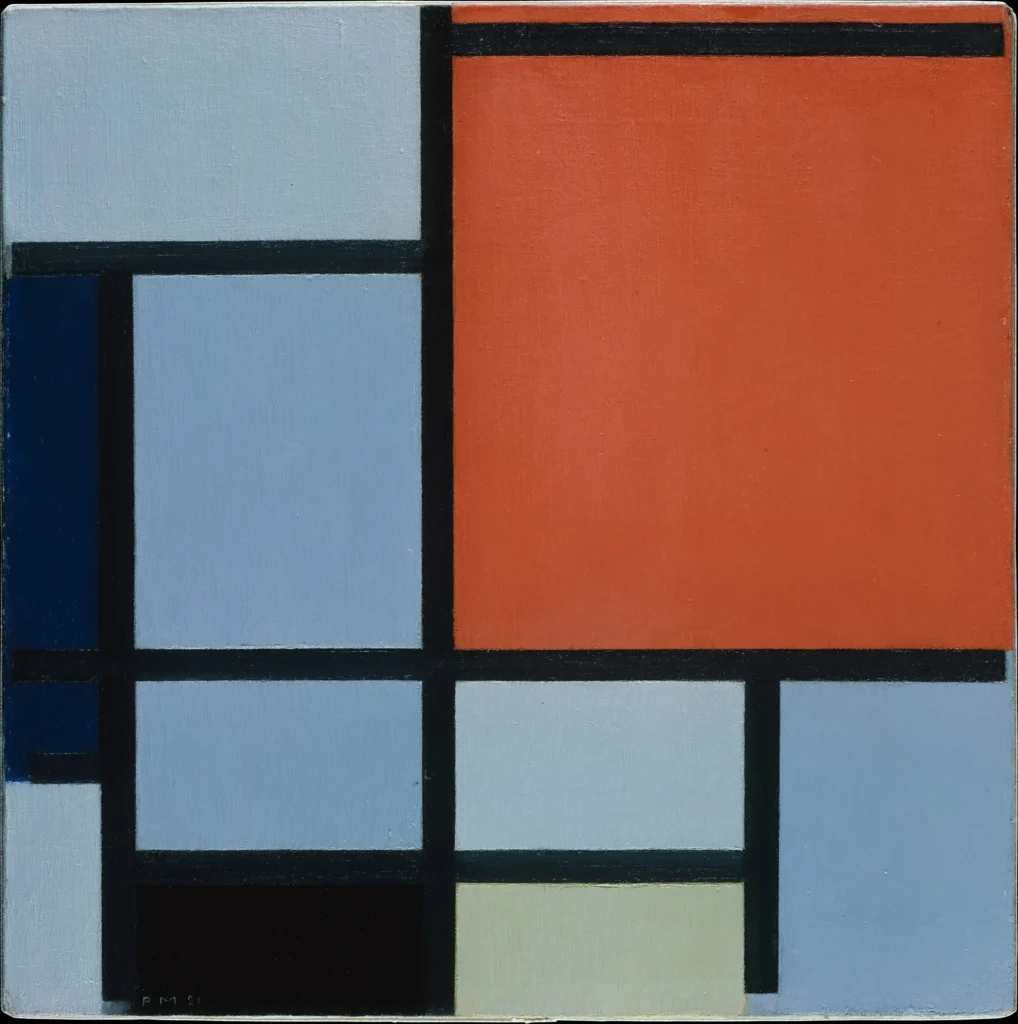
Composition concerns how the parts of an image relate to one another and to the whole. Placement, proportion, contrast, and spacing can influence where attention gathers and how it moves.[2]
Imagine a small red shape surrounded by a broad pale field. Its isolation may give it considerable presence. Move the same shape into a crowded cluster, and it may become one incident among many. Bring it close to an edge, and the surrounding space may feel newly uneven.
The shape has stayed the same; its relationships have changed.
This is also why a small mark can matter as much as a large area. Its importance depends on what surrounds it.
Some paintings invite the eye toward a clear focal point. Others distribute attention across the surface or repeatedly interrupt its movement. A useful question is: what kind of attention does this composition invite?
Color Works Through Relationships
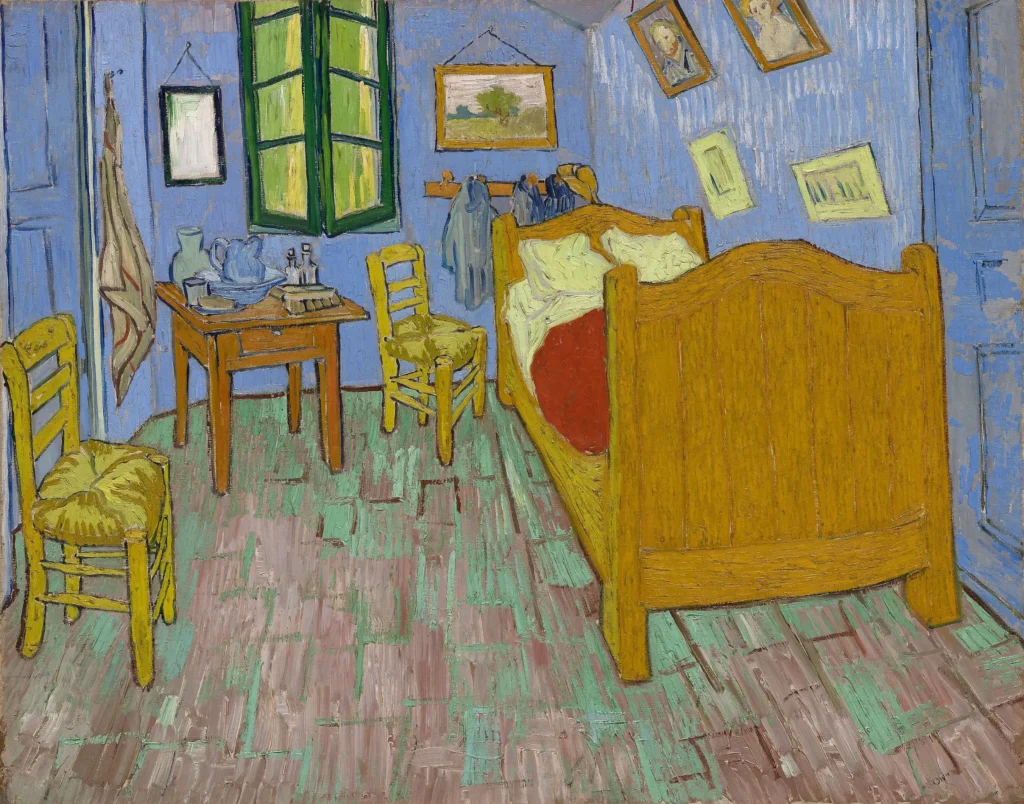
Color contributes to atmosphere, but its effects depend on the particular painting and the person looking.
A blue area might feel expansive beside a pale yellow, dense beside black, or almost luminous within muted earth colors. Its size, saturation, edges, and placement all contribute to the experience.
Cultural associations and personal memories also enter the encounter. A color linked to celebration for one viewer may carry a very different association for another.
For artists, this means testing color within the work itself. When a passage feels too quiet or too dominant, consider its neighbors as well as its hue. Sometimes changing an adjacent shape transforms a color more effectively than repainting the color itself.
How Abstraction Creates Meaning
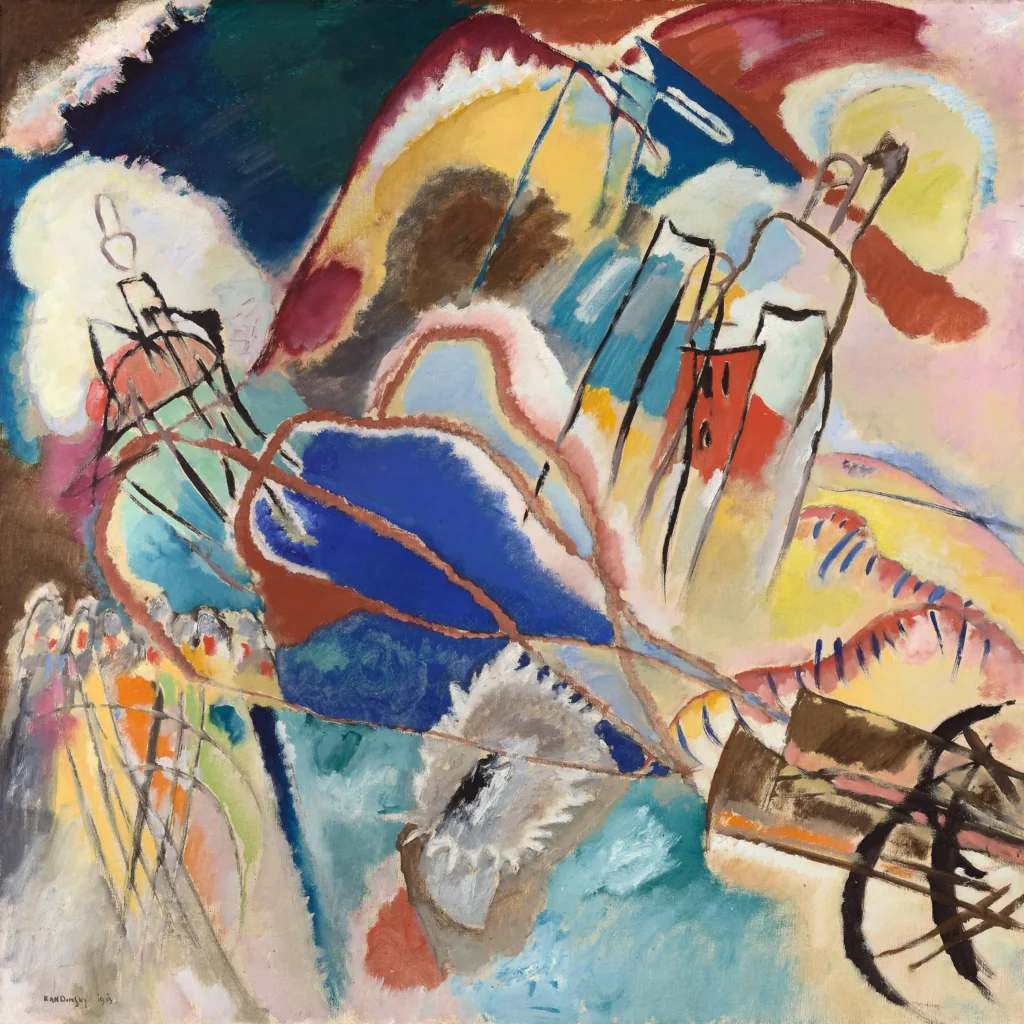
Abstract painting makes the relationship between visual form and experience especially apparent.
A cluster of angular shapes may suggest resistance. A repeated curve may introduce continuity. A sudden gap may interrupt a rhythm or give an active passage room to expand. These are possible readings to explore through looking; their relevance depends on the particular work.
Joan Mitchell offers a useful example. In its discussion of Evenings on 73rd Street (1957), the Joan Mitchell Foundation explains that the title refers to gatherings with her poet and painter friends in New York. The painting connects with lived experience through energetic marks, color, and the articulation of space, without depicting the gathering literally.[3]
This suggests one way to approach abstraction: ask how an experience might be transformed into relationships among shapes, colors, and gestures.
Meaning may emerge as an atmosphere, a sensation of movement, or the coexistence of conflicting feelings. A painting can sustain these experiences without reducing them to a single verbal explanation.
A Painting Has a Physical Presence
A painting is also an object encountered by a body.
Its scale changes how we approach it. A small work may invite close inspection; a large canvas may occupy much of our field of vision. Distance can reveal an overall structure or bring individual marks into focus.
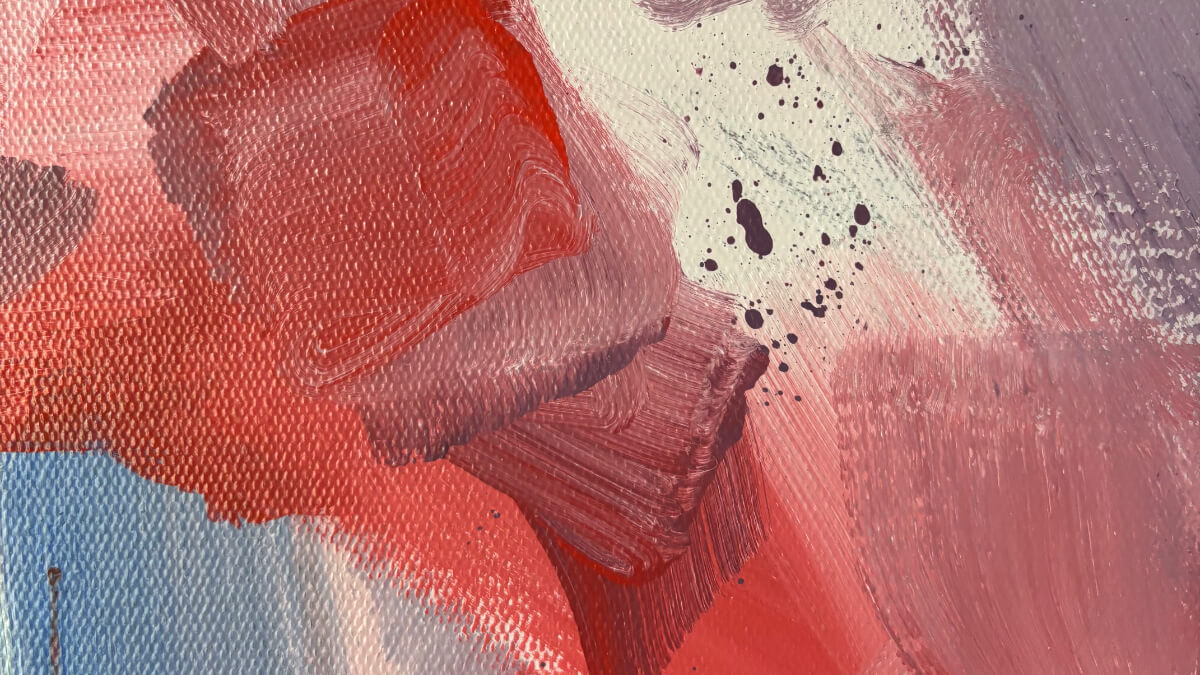
The support, surface, and way paint catches light contribute to that encounter. A photograph can communicate many visual relationships while changing others through cropping, lighting, screen color, and loss of physical scale.
For an artist, this raises a useful question: what becomes apparent in front of the work that is harder to experience through its reproduction?
Context and the Viewer Shape Interpretation
A title can redirect attention. Imagine encountering the same abstract painting under the title Reunion, then under Separation. Different relationships within it may become noticeable, even though the painted surface remains unchanged.
The setting matters too. A work seen beside related paintings invites connections that may be less apparent when it appears alone on a phone.
The viewer brings memories, cultural references, expectations, and a particular state of attention. Two people may experience the same painting differently, and one person’s response may change over time.
It helps to distinguish personal response from claims about intention. “This makes me feel isolated” describes an experience. “The artist intended to express isolation” requires supporting evidence.
Interpretation becomes more thoughtful when it stays in conversation with both the work and what we know about it.
Leave Room for What Cannot Be Fully Explained
Some paintings hold our attention through what remains unresolved.
A form may seem to emerge and disappear at the same time. Two shapes may approach one another without meeting. A quiet area may interrupt a dense passage, making us newly aware of the space between marks.
Such relationships can suggest absence, hesitation, anticipation, or distance. They also allow the viewer to remain with an experience before naming it.
For the artist, this offers permission to leave certain questions open. Explanation can enrich a painting’s reception while allowing its visual experience to retain complexity.
A Practical Exercise for Looking at Art
Choose one painting and give it five uninterrupted minutes. If possible, begin before reading the accompanying text.
- Describe. Write three observations about visible shapes, colors, edges, or spatial relationships.
- Follow your attention. Notice where you first look, where you return, and where you linger.
- Name a response. Choose a word such as spacious, restless, compressed, or suspended. Identify what in the painting contributes to that impression.
- Imagine one change. Remove a shape mentally, enlarge a gap, or change the scale of a mark. What might happen to the whole?
- Add context. Read the title, date, and available background. Notice what this information changes—and what it leaves open.
You can use the same exercise with your own work. Keep your first observations separate from your judgment, and let them guide the next experiment.
Bringing Theory Back to Painting
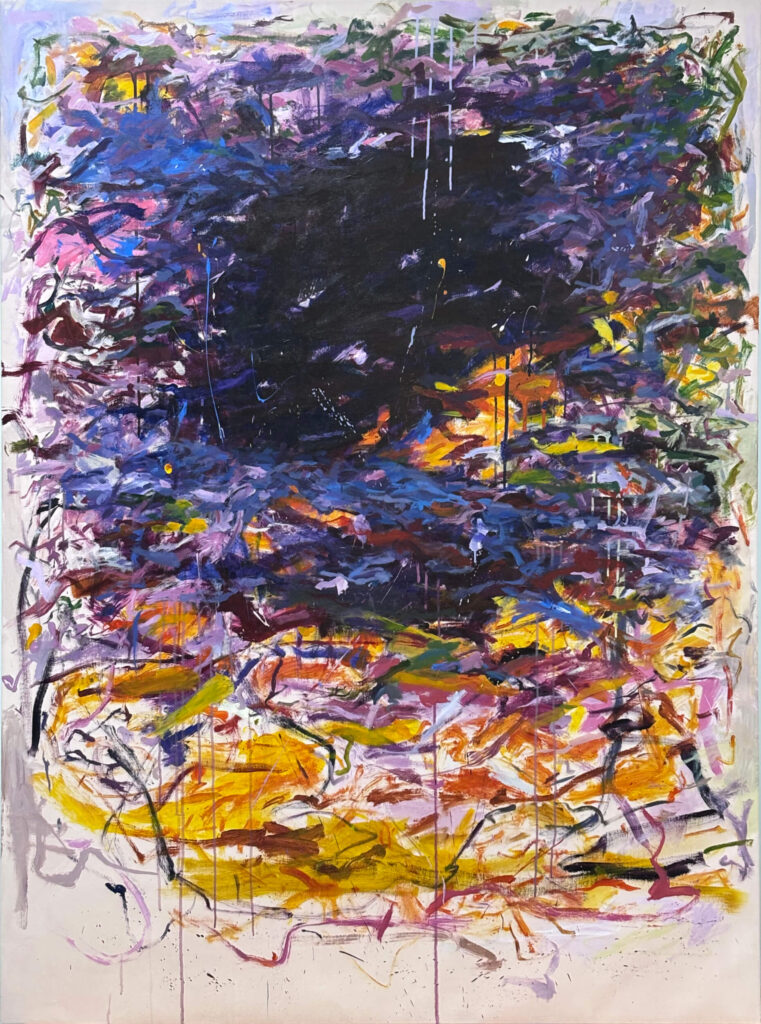
For me, these questions connect with a central aim of my practice: I give shape to the ineffable through imagination and emotions.
Shapes, composition, color, and gesture offer ways to approach experiences that are difficult to explain directly. Thinking about their relationships can help me articulate discoveries while leaving space for intuition.
Reflection does not have to happen during every brushstroke. It can come afterward, when the painting has had time to develop and I can return to it with fresh attention.
Image theory becomes useful when it brings us back to the work with more precise questions. What holds this image together? Where does its energy change? Which relationships remain compelling after the first impression?
Looking becomes a way of thinking when we begin to notice how meaning takes shape.
Sources and Further Reading
- W. J. T. Mitchell, Picture Theory: Essays on Verbal and Visual Representation. University of Chicago Press. Publisher’s overview of the book’s scope.
- J. Paul Getty Museum, Understanding Formal Analysis: Principles of Design. An introduction to balance, emphasis, and movement.
- Joan Mitchell Foundation, An Introduction Through Key Works, especially Evenings on 73rd Street (1957).